Art Portfolio of Sarah Lee
About the Archive
Sawtasura is a research and sonic archive dedicated to developing methods of recording and listening to women’s folk music, oral memory, and vernacular knowledge across the Arabian Gulf. Its approach is grounded in lived experience as communal knowledge, working through sustained relationships with women and communities to document the memories, contexts, stories, and social practices that give a tradition its meaning. Sawtasura asks what becomes audible when women and communities are approached as narrators and custodians of their own sonic histories.
The Sawtasura Library holds over 170 recordings, including women’s wedding songs and gatherings from Riyadh, Jeddah, and Najran; lullabies and children’s stories from Makkah, Al Ahsa, and Qatif; birth and motherhood rituals from Jeddah; personal memories attached to singing; and commercially recorded women’s music from Riyadh and Jeddah.
These recordings are fragments of lived experience rather than a comprehensive catalogue: situated voices and memories revealing how knowledge is transmitted, remembered, performed, and transformed. They are produced through commissioned research and the relational labour of building and sustaining trust with communities. Many of the living traditions Sawtasura documents have never entered an institutional archive and are at risk of disappearing as the conditions of their transmission change.
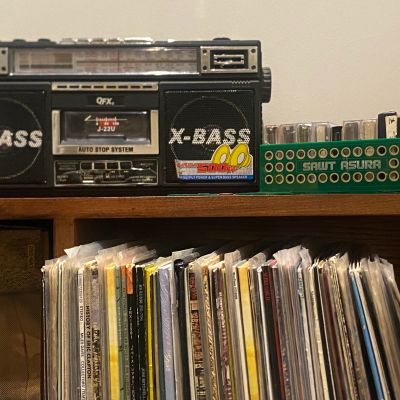
Material is currently held with Founder Tara Aldughaither at Bayt Yamama; her artist and research studio and home.
Archive Access & Acquisition
Sawtasura does not offer its archival materials on loan. Developed independently over eight years, the Library carries intellectual and curatorial value beyond the recordings themselves: their context, social provenance, documentation, consent processes, and community relationships form part of the archive. Where existing material is proposed for permanent exhibition, the appropriate framework is acquisition, recognising this intellectual and relational labour and enabling Sawtasura to continue documenting women’s traditions at real risk of disappearance.
At the same time, Sawtasura is committed to public access. Materials can be engaged through research and development, commissioned projects, listening sessions, contextual presentations, temporary exhibitions, and conversations with practitioners and knowledge-holders. These forms of access are part of Sawtasura’s public contribution and ensure that the archive remains a living resource rather than a closed collection.